

The reform of the salary system for sales assistants and shop employees will enter into force on 1 October, 2026 – get prepared in time
PAM and the Finnish Commerce Federation have revised the salary structure for sales assistants, shop employees and other occupational groups in the Collective Agreement for the Commerce Sector. The aim of the reform is to better identify the complexity factors of various tasks and make remuneration clearer.
In the future, the complexity of job tasks will be assessed through a single common job requirement classification for all professional groups. This will enhance the transparency and consistency of the salary system. The change will harmonize the system and introduce the same model for sales people that was introduced for logistics workers and white-collar employees on 1 January, 2024. PAM and the Finnish Commerce Federation will support local parties in this through both joint and individual training sessions during spring 2026.
Local cooperation is key
The new salary system will come into effect in autumn 2026, but it is important that workplaces get prepared for the change well in advance. A successful implementation of the new system requires cooperation between the employer and the staff. It is the workplaces that know the actual content and demands of different tasks, so local dialogue plays a crucial role.
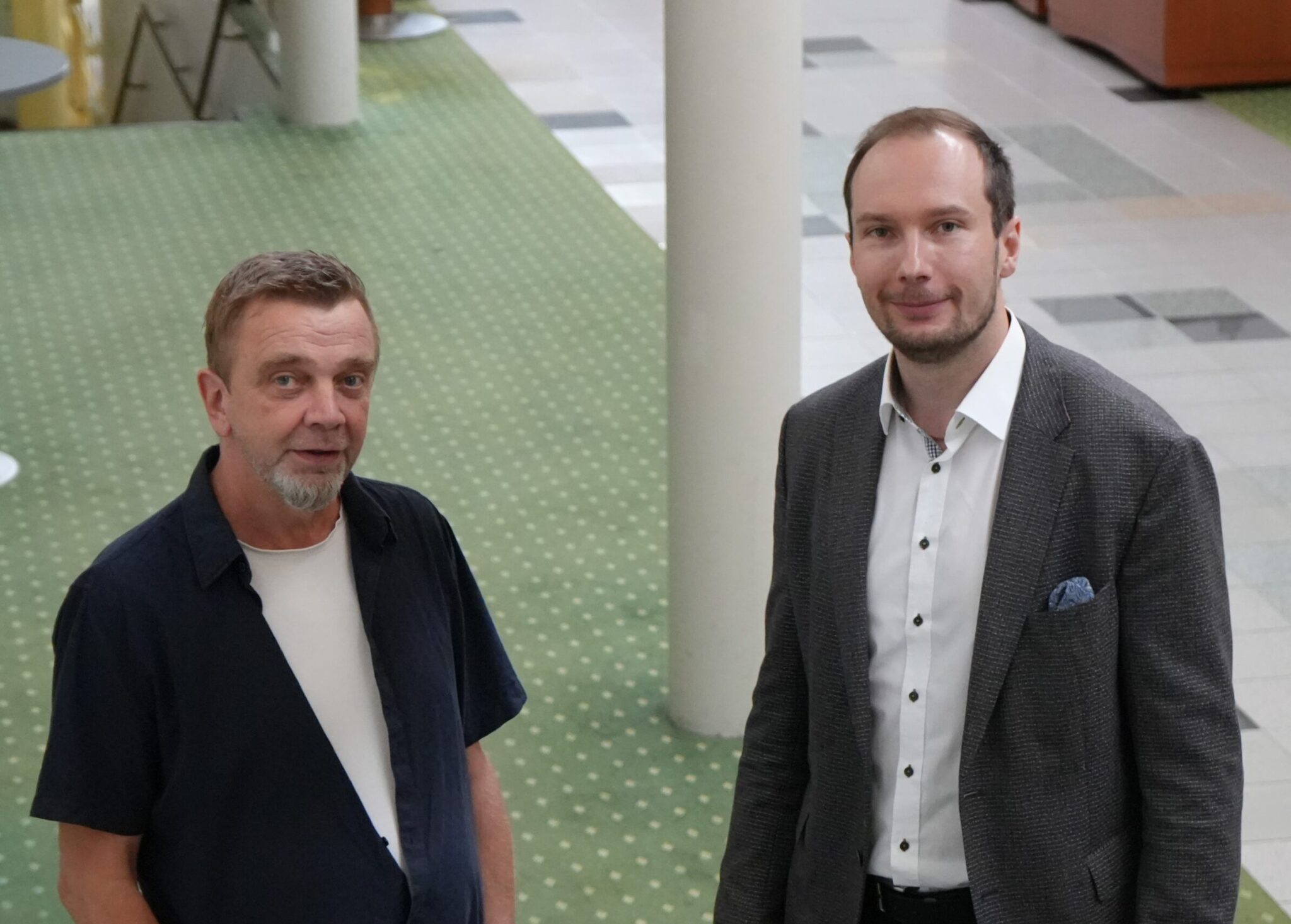
Antti Huotilainen, the Finnish Commerce Federation’s leading labour market expert, and Jyrki Sinkkonen, the commerce sector specialist at PAM, have been involved in negotiating the salary system reform. Both have previous experience from a similar reform for logistics workers and white-collar workers in 2024.
– The new salary system requires work that should start well in advance and through joint preparations so that local understanding of the reform is strengthened and the reform is smoothly implemented, Huotilainen says.
According to Huotilainen, in situations that have required consultation with PAM and the Finnish Commerce Federation, the problem has often been that the parties have not had a common understanding of the actual content of some work tasks.
– It is impossible to assess the complexity of a task if the parties have different ideas about what the task should even be assessed for, Huotilainen describes.
– But in nearly all situations, we have found common ground locally when both parties have assessed the complexity based on shared information, Sinkkonen specifies.
Joint preparation makes implementation easier
In practice, good preparation requires reviewing the job descriptions together with the union representative. If there is no union representative at the workplace, then the job descriptions can be discussed with other employee representatives. More detailed procedures can be defined locally. It is important that the people who are best acquainted with the tasks to be assessed and their content are included in the process.
– When the employer and union representative examine the tasks and their level of complexity together, the best solution is often found locally. Shared background information and good preparation in advance make the work easier and the end results are perceived as fairer, Sinkkonen emphasizes.
Joint guidelines describe the stages of the process and support workplaces in implementing job classifications. In addition, the material discussed in previous union trainings provides a good understanding of the overall picture and helps the parties to understand the goals of the reform.
We encourage employers and personnel to start preparing well in advance by using the available material and participating in training courses.
– It is worth getting involved and familiarizing yourself with all the material in advance. This gives a good starting point for work at the local level, Huotilainen and Sinkkonen encourage.
PAM organises regional training during spring – company representatives are welcome
PAM will organise regional training sessions during spring 2026 offering information on the salary system reform. Employer representatives are also welcome to join these events. The events are free and they will be held in Finnish, and in some of them a trainer from the Finnish Commerce Federation will also be present. More detailed information on individual training sessions can be found separately for each date.
The training consists of a joint morning session (for companies and union representatives) and an afternoon session with Q&A and discussion (for PAM union representatives).
Turku 3.3.
Pori 4.3.
Vaasa 10.3.
Jyväskylä 12.3.
Joensuu 17.3.
Kuopio 18.3.
Lahti 24.3.
Lappeenranta 25.3.
Oulu 1.4.
Tampere 8.4.
Helsinki 13.4.
Registration
Employer representatives register via Finnish Commerce Federation’s link. The invitation is also open to employers representing unorganised companies. The link to registration can be found in the additional information for each city. Union representatives register via PAM’s own system.
There are limited number of seats available, and the number of available seats vary by location. Priority in registration is given to representatives of member companies of the Finnish Commerce Federation.
We urge participants to familiarize themselves with the joint guidelines before the training. The training uses joint training material produced by Finnish Commerce Federation and PAM.